With more than 15 years of leadership experience across distribution, logistics, transportation, engineering, and supply chain operations, Jon Holler brings a unique perspective to the challenges facing today’s footwear distributors.
Before joining DLN as a Senior Account Executive, Jon served as Vice President of Distribution for global footwear company Caleres. He oversaw logistics operations supporting a portfolio of 14 brands, including Famous Footwear, Naturalizer, and Sam Edelman.
Throughout his career, Jon has led large-scale distribution operations, strategic capital projects, and enterprise-level budgets. He has driven transformative initiatives in automation, facility optimization, acquisition integration, and operational excellence, and previously held leadership roles at Nordstrom, supporting retail and e-commerce expansion across the East Coast.
“I’ve always been drawn to the people side of business and building strong relationships. Through various internships and early career experiences, I discovered that distribution and supply chain operations offered a unique opportunity to combine engineering, process improvement, and collaboration,” Jon says.
“In my role now working with clients, I’m bringing that background and experience to guide companies through their own projects.”
Here’s 5 Questions with Jon, where we discuss the future of footwear distribution, lessons learned from the operator side of the business, and how companies can gain a competitive edge in an increasingly complex marketplace.
1. What Do You Predict Will Happen in Footwear Distribution Over the Next Three to Five Years?
“As sourcing strategies continue to evolve globally, I expect footwear distributors to place an even greater emphasis on flexibility and scalability,” Jon says.
Distribution networks will need to adapt quickly to changes in manufacturing locations, consumer demand patterns, and fulfillment requirements. That need for agility will drive increased adoption of technologies and operational processes that allow organizations to scale efficiently without major disruption.
The companies that succeed will be those that build adaptable distribution networks capable of responding quickly to changing business conditions while maintaining high service levels and controlling costs.
2. What Are the Most Unique Challenges in Footwear Distribution That Suppliers Often Don’t Understand?
Jon suggests that one of the most overlooked challenges is the shoebox itself.
Footwear boxes often have separate lids that can easily become dislodged when products are positioned on their sides to improve barcode scanning. Once that happens, operations can face mismatched shoes, empty cartons, and costly exception-handling processes.
“The importance of preserving package integrity was also reinforced throughout my career. For many consumers, the shoebox is the first physical interaction with a brand, and many customers continue using the box for storage long after purchase,” Jon explains.
Technologies that expose products to excessive drops, impacts, or improper handling can damage the packaging and negatively affect the customer experience.
Suppliers who understand these nuances can make much more effective recommendations around conveyor design, sorting technology, product orientation, and handling methods that protect both operational efficiency and brand presentation.
3. What Is the Most Important Thing You’ve Learned Since Moving to the DLN/Supplier Side?
Many companies believe they need to develop a near-final design internally and simply bring suppliers in to provide pricing.
In reality, integrators can provide meaningful value much earlier in the process.
“One of the biggest surprises has been seeing just how much value an experienced integrator can bring before a solution is even defined,” Jon says.
The right partner can help determine whether certain technologies make sense in the first place, identify alternative approaches that may not have been considered, and conduct engineering studies that create a fact-based path forward.
“Thinking back on projects I’ve overseen, I realize I could have gained access to specialized expertise that would have expanded my team’s capabilities without requiring us to dedicate as many internal resources,” Jon says.
4. What Is the First Step for Footwear Leaders Looking to Gain a Competitive Advantage?
“Start by listening to your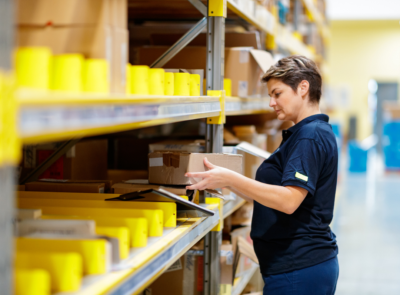 operation,” says Jon.
“Frontline associates, supervisors, and managers often understand the biggest pain points and best opportunities for improvement better than anyone else. Many of the easiest wins are already known internally. They simply haven’t been documented or prioritized.”
Once those opportunities have been addressed, Jon recommends considering an external partner to conduct a broader operational assessment.
An objective, third-party evaluation can benchmark performance against industry best practices, identify the greatest opportunities for improvement, and create a practical roadmap for future investments.
“The organizations that consistently outperform their competitors are not necessarily the ones with the most automation,” he explains. “They’re the ones that understand their operation, make decisions based on data, and invest strategically in the capabilities that support their long-term business goals.”
5. Can You Share a Solution to a Common Challenge Faced in the Distribution Industry?
One challenge Jon has seen repeatedly is the tendency to evaluate automation opportunities technology-first rather than strategy-first.
“Many organizations attend trade shows, review the latest automation solutions, and then try to determine which technology will generate the highest return on investment,” Jon says.
“While that approach can sometimes work, the most successful projects I’ve experienced begin in the opposite direction.”
Jon suggests asking yourself some questions about the next 3 – 5 years. How will customer expectations change? What will future order profiles look like? How might sourcing strategies evolve? And what growth objectives does the organization need to support?
Once those questions are answered, companies can evaluate whether their current distribution capabilities align with those future needs. If not, they can identify the capabilities they need and determine which technologies will help bridge the gap.
“I’ve learned that executive teams are much more likely to support investments when they are tied to strategic business objectives rather than operational improvements alone,” he says.
The DLN Difference
DLN Integrated Systems is an integrator with a robust in-house consulting practice, software, customized automation and robotics, and a knowledgeable lifecycle services team. We also focus on operational readiness and preparing client teams for new equipment and processes by offering extensive testing, training, and change management to minimize the learning curve and accelerate system ramp-up.
Our team is committed to providing the optimal solution to our clients. Feel free to contact us to start a no-obligation conversation about your specific situation.