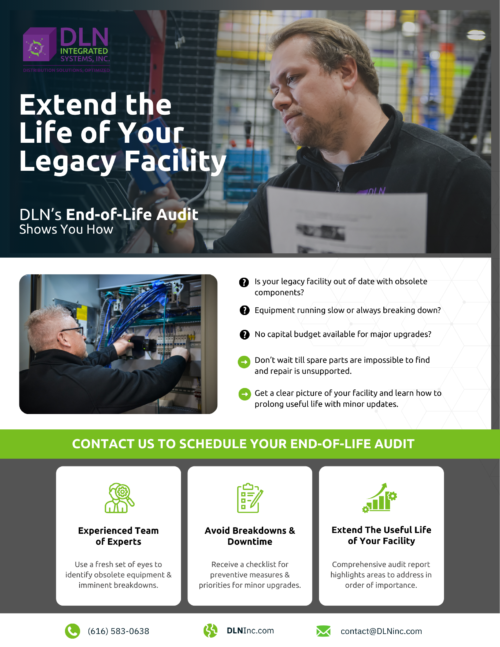
Why An End-of-Life Audit Can Prevent Shutdown
Distribution centers rarely fail overnight—they fail slowly, quietly, and expensively.
If you’re running an older facility, you may be feeling the pressure: equipment that’s harder to repair, systems held together with tribal knowledge, and increasing downtime that chips away at productivity.
But here’s the truth: most DC leaders don’t realize how close they are to a critical failure until it’s too late.
That’s where an End‑of‑Life Audit can change everything.
The Reality Many DC Managers Face
Your facility is aging.
Your equipment is slowing down or breaking down more often.
Spare parts have longer lead times—or aren’t manufactured anymore.
And despite all this…there’s no budget for a major system upgrade.
Your mission is clear:
Keep the building running as long as possible—without risking an operational crisis.
The Hidden Dangers of Obsolete Equipment
Many DCs rely on clever maintenance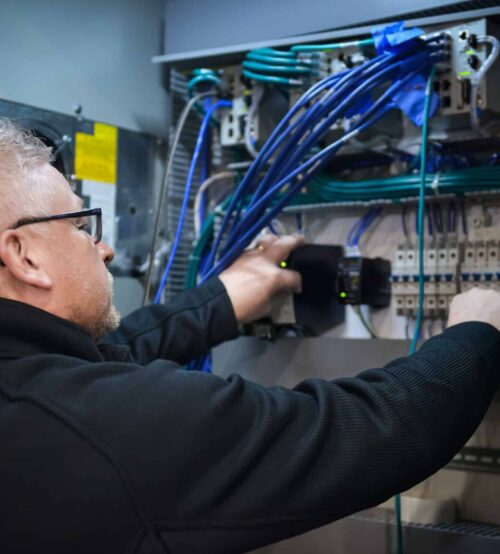 hacks built up over years—patches, undocumented fixes, or custom components created in‑house. They keep equipment running…until suddenly, they don’t.
Once these parts fail, it’s often impossible to source replacements.
This includes things like:
- Retired PLCs
- Discontinued Allen‑Bradley components
- Unsupported electrical hardware in control panels
- Custom mechanical fixes no one remembers how to replace
Risks of running with obsolete equipment include:
- Long downtime
- Emergency gray‑market purchases
- Forced major system upgrades at the worst possible time
An audit exposes these hidden risks—before they become emergencies.
How an End‑of‑Life Audit Helps You Prevent Expensive Surprises
At DLN, we send in a team of experienced specialists who have seen hundreds of facilities at every stage of their lifecycle. They know what to look for and what signs indicate that a “small issue” is actually a looming shutdown.
Your audit includes:
- Identification of imminent risks and failure points
- A detailed inventory of obsolete or unsupported equipment
- A prioritized action plan for extending the life of your assets
- A maintenance and preventive‑care checklist tailored to your systems
- Recommendations for future upgrades—when the time is right
The result is simple: a clear, unbiased roadmap to keep your facility running safely, efficiently, and longer.
Why This Matters Now
Running an aging distribution center 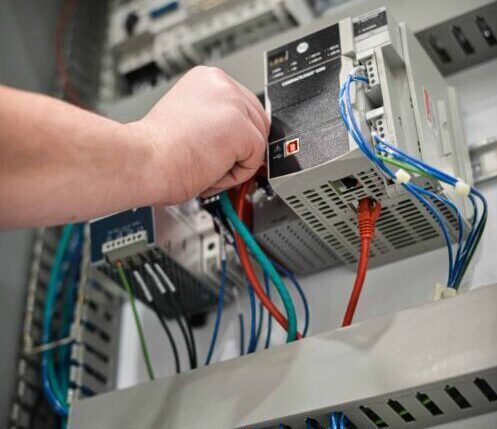 is a balancing act.
You’re maximizing every run hour while minimizing every risk.
But without clear visibility into what’s failing, what’s obsolete, and what’s one breakdown away from a crisis—you’re operating with blind spots.
An End‑of‑Life Audit gives you:
- Confidence in your current operations
- Awareness of your true risk areas
- A plan to extend your facility’s useful life
- A roadmap for future upgrades—when budgets allow
In other words: it buys you time, stability, and control.
What Happens After the Audit?
Depending on our findings, we can execute the needed updates. Our in-house controls engineering team has years of experience upgrading obsolete controls.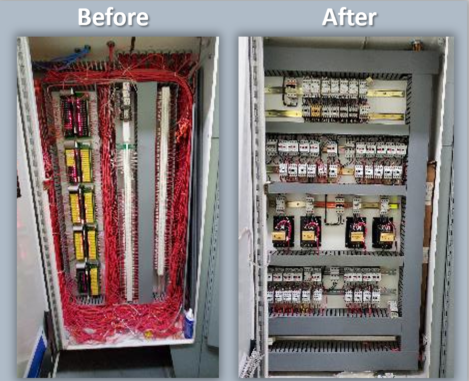
Our team can provide panel design, controls layouts, PLC programming, robotics and HMIs as well as peripherals like scanners, scales, label applicators and more.
We will also share operational recommendations. For example, at a recent audit, we discovered the company was assigning the most complex maintenance tasks to the least experienced technicians. The result was frequent mistakes and downtime.
Corporate had designed schedules based on seniority as opposed to experience – without realizing the operational impact.
The audit uncovered the need and made the case for smarter labor scheduling, leading to increased uptime.
The DLN Difference
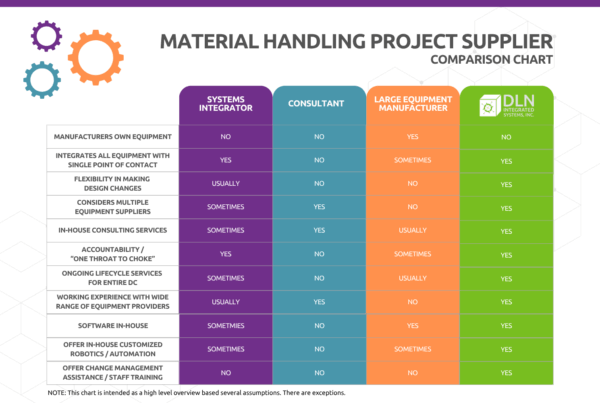
DLN Integrated Systems is an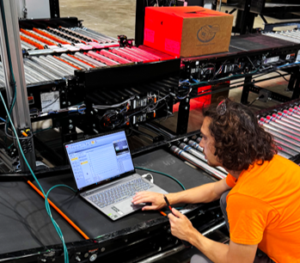 integrator with a robust in-house consulting practice, software, customized automation and robotics, and a knowledgeable lifecycle services team.
We have extensive experience in controls, software and mechanical upgrades using a wide variety of trusted manufacturers.
Learn more about our previous projects.
Let’s Discuss Your End-of-Life Audit!
Download Flyer